
.webp)
The fourth T20 International between India and New Zealand turned into a nightmare for the home team at Visakhapatnam on January 28, 2026. New Zealand crushed India by 50 runs, and this wasn't just another loss. It showed exactly what's wrong with Team India just weeks before the T20 World Cup 2026 begins.
India won the toss and chose to bowl first, hoping to restrict New Zealand to a manageable total. But things didn't go as planned. The Kiwis put up a massive 215 runs for 7 wickets in their 20 overs. India's response was disappointing as they could only manage 165 runs before getting bowled out in just 18.4 overs.
New Zealand's Explosive Start
Tim Seifert and Devon Conway destroyed the Indian bowling attack right from the first over. Seifert played a brilliant knock of 62 runs off just 36 balls, hitting boundaries all around the ground. Conway supported him well with 44 runs, and together they built a strong foundation for New Zealand's big total.
The Indian bowlers looked clueless in the powerplay overs. They couldn't find the right length and New Zealand batsmen took full advantage. Even when India managed to take wickets in the middle overs, the damage was already done. The Kiwis accelerated again towards the end and reached a commanding score of 215.
India's Batting Disaster
The chase started in the worst possible way when Abhishek Sharma got out on the very first ball of the innings. This early blow put immediate pressure on the remaining batsmen. The top order collapsed like a house of cards, and suddenly India was staring at 87 runs for 5 wickets.
At this point, the match seemed completely lost. But then came Shivam Dube with a sensational counter-attack. He smashed 65 runs off just 23 balls, hitting massive sixes and finding boundaries at will. For a brief moment, it looked like Dube might pull off the impossible and take India to victory.
However, cricket is a team game and one man can't win matches alone. Dube didn't get enough support from the other end. Once he got out, India's remaining batsmen fell quickly and the team was bowled out for 165 runs. The 50-run defeat was not just big in numbers but also in terms of confidence and momentum.
The Opening Problem Nobody Can Ignore
Abhishek Sharma getting out on the first ball showed India's biggest weakness right now. The opening partnership has been struggling for consistency. In T20 cricket, good starts are everything. If your openers can't give you a solid platform, the middle order faces too much pressure.
India needs openers who can stay at the crease for at least the first six overs and score freely. The current opening combination is not working. Either the batsmen are getting out too early or they're playing too slow. Both situations hurt the team badly in run chases.
With the World Cup coming soon, the team management must solve this opening puzzle quickly. They might need to try different combinations in the final match against New Zealand to find the right pair who can handle pressure and score runs.
Middle Order Still Finding Its Feet
Apart from Shivam Dube's heroics, the middle order showed nothing special. When top order batsmen fail, the middle order must take responsibility and build the innings carefully. But Indian batsmen in the middle kept throwing away their wickets with poor shot selection.
The lack of partnerships was shocking to watch. In T20 cricket, you need at least one good partnership to win matches. India had none except for Dube's brief fireworks. Players came in, played a few balls, and went back to the pavilion without making any impact.
This inconsistency in the middle order is worrying because the World Cup will have tougher opponents and bigger pressure situations. If the middle order can't handle New Zealand's bowling, how will they face teams like England, Australia or Pakistan in crucial knockout matches?
Selection Mistakes Cost India Dearly
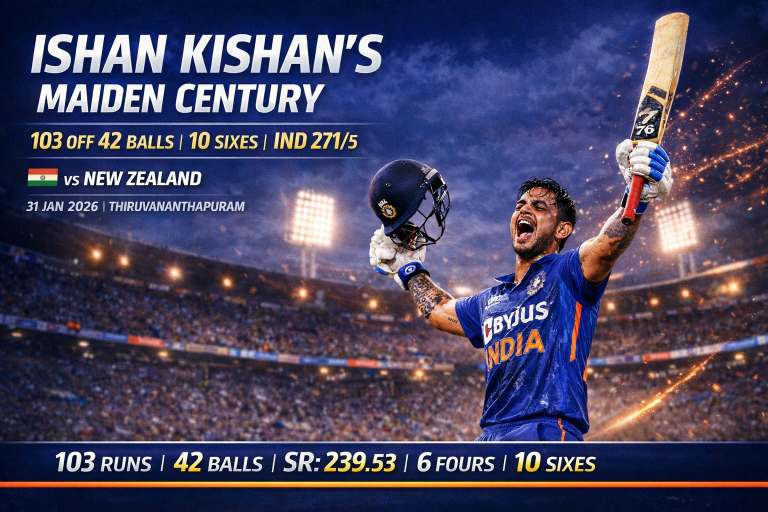
The team management made a controversial decision by resting Ishan Kishan due to a small injury and bringing in Arshdeep Singh instead. This gave India an extra bowler but weakened the batting lineup significantly. The decision backfired as India's batting collapsed and bowlers couldn't defend even a big target.
India went into the match with a bowling-heavy team when they should have balanced it better. In T20 cricket, you need strong batting depth because high-scoring games are common. Having one less specialist batsman made the chase much harder than it should have been.
The selectors also need to answer questions about certain players who are getting repeated chances despite poor form. Fans and experts are asking why some players keep their spots while others sit on the bench even after good performances in domestic cricket.
What This Means for T20 World Cup 2026
This defeat has raised serious doubts about India's World Cup preparations. The tournament starts in just a few weeks, and India looks far from ready. The batting depth is questionable, the opening partnership is unstable, and the team balance is all wrong.
Other teams watching this match will feel confident about beating India. New Zealand showed the exact blueprint to defeat this Indian team. Put pressure on the openers, take early wickets, and the middle order will crumble under pressure. It's that simple and that scary for Indian fans.
India is hosting the World Cup along with Sri Lanka, which means expectations are sky-high. Fans expect nothing less than the trophy. But with performances like this, an early exit from the tournament seems very possible unless things change dramatically.
Urgent Changes Needed Before World Cup
The team management has only one match left in this series to fix these problems. They need to finalize their best playing eleven and stick with it. Constant changes and experiments must stop now because players need to know their roles clearly.
The batting order needs restructuring. The team should put their most reliable batsmen at the top and build the order around them. Players who can handle pressure must bat in crucial positions, not those who panic when wickets fall.
Fielding and bowling plans also need improvement. While the bowlers did pull things back in the middle overs against New Zealand, they still conceded too many runs. Death bowling remains a weak area that opposition teams will target mercilessly.
Final Match Is Make or Break
The fifth and final T20I against New Zealand on January 31 is now more than just a bilateral series match. It's India's last chance to test their combinations and find solutions before the World Cup begins. The pressure is enormous on the team management and senior players.
If India loses again, the confidence will be shattered completely going into the World Cup. But a strong comeback victory can restore belief and momentum. The team needs to show character, learn from mistakes, and prove they can bounce back from setbacks.
The road to T20 World Cup glory just got much harder for India after this crushing defeat. Time is running out to fix the problems that everyone can now see clearly. The next few weeks will decide whether Team India enters the World Cup as contenders or pretenders.
Comments (42)
Great analysis! I think the toss will be crucial. If India bats first and puts up 300+, it's game over for NZ.
Don't underestimate the Black Caps! We've won in India before. Williamson's leadership will make the difference.